ConvertfilePlus

AI & Machine Learning

Best AI Photo Editing Tools in 2026 featuring Lightroom AI, Luminar AI, and Photoshop AI comparison
AI & Machine Learning, Photography & Image Editing

Best AI Photo Editing Tools in 2026: Lightroom AI vs Luminar AI vs Photoshop AI

Introduction Most professionals didn’t realize how much time they were wasting on photo editing until AI started doing it faster. Whether you’re running a marketing team, managing product catalogs, or building a personal brand on LinkedIn, visual content has quietly become one of the most resource-intensive parts of modern business operations. According to a 2025 Adobe usage report, creative teams spend an average of 6–8 hours per week on repetitive image adjustments  color correction, background removal, noise reduction  tasks that are now being automated with surprising accuracy. Meanwhile, AI image editing adoption among SMBs grew by over 40% between 2024 and 2026, largely driven by tools that no longer require design training to use well. The three platforms dominating this conversation right now are Adobe Lightroom (with its AI-enhanced suite), Skylum’s Luminar Neo, and Adobe Photoshop’s increasingly capable Generative AI features. Each solves a different problem, and each has a different ideal user. If your team creates content at any real volume  or if you’re still outsourcing basic edits  this comparison is worth a careful read before your next budget cycle. Our Lates Blog : How AI Reasoning Models Work: O3, Gemini Thinking, and the Future of Deep Thinking AI What Exactly Is AI Photo Editing? Before jumping into the comparison, it’s worth being clear about what “AI editing” actually means in this context  because the term gets stretched in different directions by different vendors. At its core, AI photo editing refers to tools that analyze image content and make intelligent, context-aware adjustments automatically. This goes beyond simple filters or presets. The AI understands what’s in the photo  sky, skin, fabric, background  and edits each element based on that understanding. Think of it this way: a traditional editor adjusts sliders and masks manually. An AI editor looks at a portrait and says, “That’s a face, that’s a background, here’s what needs doing”  and does it without you selecting anything. The practical result: edits that used to take 15 minutes can happen in under 30 seconds. Why Businesses Are Moving Beyond Manual Editing The shift isn’t really about technology preference. It’s about throughput. A startup running paid campaigns across five channels might need 40–60 edited images per week. A real estate firm processing property photos needs even more. Doing that manually either slows the team down or pushes up outsourcing costs. AI tools have changed the math in a few specific ways: The three tools below each address this shift differently. Lightroom focuses on workflow efficiency for photographers. Luminar prioritizes accessibility for non-technical users. Photoshop leans into creative control and generative capability. The Three Tools: What Each One Actually Does Well Adobe Lightroom AI Lightroom has been the industry standard for photo management and editing for years. The AI layer added in recent versions doesn’t try to reinvent the tool  it enhances what experienced photographers already rely on. What works well: The honest limitation: Lightroom AI is built for photographers who already understand editing. The interface assumes familiarity. If your team doesn’t have that background, the learning curve is real. Best for: Photography teams, marketing agencies, anyone managing large volumes of RAW files who wants precision tools with AI assistance layered in. Luminar Neo (Skylum) Luminar’s pitch has always been accessibility, and the AI features in the 2026 version double down on that. It’s designed for people who want good results without investing weeks in learning the craft. What works well: The honest limitation: Luminar leans heavily on presets and one-click solutions. Experienced editors may find it frustrating when they want fine-grained control that simply isn’t accessible. It’s also a standalone app  it doesn’t integrate into a broader asset management workflow the way Lightroom does. Best for: Small business owners, content creators, social media managers, and teams without dedicated designers who need good visual output without a steep learning curve. Adobe Photoshop Generative AI Photoshop’s Generative Fill and Expand features, powered by Adobe Firefly, have matured significantly since their initial rollout. This is where the tool genuinely earns attention in 2026. What works well: The honest limitation: Photoshop remains the most complex of the three tools. The generative AI features are powerful, but you still need foundational Photoshop knowledge to use them efficiently. The tool also requires a Creative Cloud subscription, which isn’t cheap for smaller teams. Best for: Design professionals, marketing directors managing brand visual standards, and teams that need creative manipulation beyond simple enhancement. The Real Business Case: Where Each Tool Saves You Money Different tools justify themselves differently, and it’s worth thinking about this before committing to a subscription. Lightroom AI saves time on volume. If you’re processing 500 product photos a month, the AI masking and batch editing features alone can cut editing time in half. For photography-heavy businesses, the ROI calculation is usually straightforward. Luminar Neo saves money on talent. If your alternative is hiring a retoucher or paying a freelancer for basic work, Luminar’s one-click tools can cover a surprising amount of that ground. The per-seat cost is low relative to outsourcing. Photoshop AI saves money on production. The generative features reduce the need for reshoots. If you need a product on a white background, then on a lifestyle background, then cropped differently for a banner  that used to mean three separate shot setups. Now it’s often one shoot and some prompting. What Businesses Should Consider Before Choosing It’s tempting to pick the tool with the most impressive demo reel. But a few practical questions matter more: Challenges Worth Acknowledging No tool is frictionless, and these three have real limitations worth naming. AI editing can produce artifacts  strange blurs, unnatural skin textures, misidentified objects  especially with complex images. Generative AI outputs are inconsistent; the same prompt can yield very different results. Licensing for AI-generated content is still evolving, which matters if you’re in a regulated industry or using content commercially. There’s also the question of over-reliance. Teams that lean entirely on AI editing can lose the visual judgment needed to catch when something looks

How AI Reasoning Models Work featuring O3, Gemini Thinking and AI Agents for Business
AI & Machine Learning

How AI Reasoning Models Work: O3, Gemini Thinking, and the Future of Deep Thinking AI

Introduction Something shifted quietly over the last eighteen months. Businesses that had written off AI as a productivity novelty  a glorified autocomplete  started noticing something different. The models weren’t just answering questions faster. They were actually reasoning through problems. A McKinsey report from early 2025 found that AI adoption among enterprises had crossed 70%, up from under 50% just two years earlier. More telling was where that adoption was happening: not in simple content generation, but in decision-support, financial modeling, and complex research tasks. That’s not a coincidence. It tracks directly with a new class of AI  what researchers and builders now call reasoning models. Most people have heard of ChatGPT or Gemini in passing. Far fewer understand that underneath the surface, a new architecture has quietly replaced the old one for high-stakes thinking tasks. Models like OpenAI’s O3 and Google’s Gemini Thinking don’t just predict the next word. They pause, plan, and work through problems the way a methodical analyst would. If you’re running a business  or responsible for one  this distinction matters more than the AI hype cycle suggests. And the window to understand it, before it reshapes workflows and competitive dynamics, is narrowing faster than most people realize. Read Also : How Google AI Overview Is Transforming SEO and Search Results What Exactly Is an AI Reasoning Model? Most AI systems work on a simple principle: given input, produce output. Fast. The model sees a question and generates an answer, token by token, without stopping to reconsider. Reasoning models work differently. They’re trained to think through problems in steps  sometimes hundreds of steps  before committing to a final answer. It’s the difference between a junior employee who blurts out the first answer that comes to mind and a senior consultant who maps the problem before speaking. O3, released by OpenAI in late 2024, was the first model to demonstrate this capability at scale. It could solve graduate-level math problems, pass rigorous coding benchmarks, and work through multi-step logic that earlier models simply couldn’t handle. Google followed with Gemini Thinking, applying similar principles across scientific reasoning and long-document analysis. The practical implication: these models are finally good enough for tasks that actually matter in business  not just drafting emails, but analyzing complex contracts, auditing financial logic, or reasoning through regulatory compliance questions. Why Businesses Are Moving Beyond Chatbots There’s an important distinction that often gets lost in vendor marketing. A chatbot retrieves or generates information. It’s reactive. You ask, it answers. An AI reasoning model doesn’t just retrieve  it works. It can be given a goal, a set of constraints, and context, and then figure out the path to get there. The difference shows up clearly in practice: The gap between “answers questions” and “solves problems” is where most of the real business value lives. Designer Note: Create a side-by-side comparison table or split visual showing: The Real Business Problems AI Reasoning Models Can Solve Let’s be specific, because this is where the conversation usually gets too abstract. Customer service is the most obvious starting point. Reasoning models can handle nuanced complaints, interpret ambiguous requests, and de-escalate emotionally charged interactions  because they can hold context and weigh multiple factors at once, not just pattern-match to a scripted response. Internal operations is where the efficiency gains get interesting. Think of all the decisions your team makes that follow a general logic but require judgment: approving vendor invoices that don’t match exactly, routing support tickets that fall between categories, flagging financial anomalies that aren’t technically wrong but look unusual. Reasoning models handle these well. Lead generation and qualification is another area. A well-configured reasoning model can research a prospect, score them based on fit, and draft an outreach message  in minutes, not days. Data analysis is perhaps the most underrated application. Most business data is messy, inconsistent, and stored across multiple systems. Reasoning models are unusually good at working through ambiguous data sets, surfacing what matters, and explaining their logic  which makes them genuinely useful rather than just fast. Scheduling and coordination might sound simple, but for teams managing complex calendars, multi-party dependencies, or resource constraints, the combinatorial problem is hard. Reasoning models handle it without complaint. Why Smaller Businesses May Benefit More Than Enterprises Enterprise organizations have entire IT departments, vendor contracts, and months-long procurement cycles. A 10-person team doesn’t. That’s actually an advantage right now. Small businesses can move fast. There’s no bureaucracy deciding which AI tool gets approved. No six-month implementation project. A founder or operations manager can identify a painful, repetitive workflow this week and have an AI reasoning system handling part of it next week. The economics are also compelling. Hiring a skilled analyst, customer support lead, or operations coordinator costs real money  and takes time. A reasoning model doesn’t replace that person entirely, but it can handle 60–70% of the workload that was consuming their hours. For a lean team, that’s the difference between keeping up and falling behind. Larger companies will get there too. They just move slower. The Economics Behind AI Reasoning Models The numbers are starting to look serious. A Stanford HAI report from 2025 noted that businesses deploying advanced AI models were reporting productivity gains in the range of 20–40% for knowledge-work tasks. That’s not a marginal improvement  it changes how you staff projects and what timelines you can credibly commit to. The cost picture is also shifting. Early AI APIs were expensive and slow. O3 and its counterparts are dramatically faster and cheaper than they were eighteen months ago, with pricing models that make per-task economics viable even for small-scale operations. Competitive advantage is probably the most important economic variable, and the hardest to quantify. When one company in your space is running reasoning models to accelerate research, analysis, and decision-making  and you’re not  the gap compounds quietly. It doesn’t show up in one quarter. It shows up over two years. Challenges Businesses Need to Consider None of this is without friction, and it’s worth being clear-eyed about

Physical AI concept showing a human worker collaborating with an intelligent robot in a modern industrial environment, representing the future of human-robot collaboration and smart automation.
AI & Machine Learning

Physical AI: Taking Human-Robot Collaboration to the Next Level

Most technology conversations eventually circle back to software. Apps, platforms, models, APIs — that’s where the investment dollars go and where most of the headlines live. But quietly, a different kind of shift is underway. The physical world is catching up. Physical AI the integration of artificial intelligence into robots, machines, and embodied systems that interact with the real world has moved from a niche research topic into a genuine business priority. According to the International Federation of Robotics, global installations of industrial robots crossed 500,000 units in a single year for the first time in 2023. Meanwhile, venture investment in robotics and physical AI startups reached multi-year highs through 2024, with analysts at Goldman Sachs projecting the humanoid robot market alone could hit $38 billion by 2035. These numbers matter less as statistics and more as a signal. Capital follows conviction, and right now, a lot of smart money believes that AI embedded in physical systems is the next major productivity frontier. For business owners and operators, the question isn’t whether Physical AI will affect your industry. It almost certainly will. The more useful question is: what does it actually mean in practice, and what should you be doing before 2030 to stay ahead of it? Read Also : Top 10 Best Autonomous AI in 2026 (That Can Work Without Human Input) What Exactly Is Physical AI? Strip away the jargon and Physical AI is fairly straightforward: it’s artificial intelligence that doesn’t just think — it acts in the real world. A regular AI model reads text and generates a response. A Physical AI system perceives its environment through sensors, makes decisions, and then moves, grabs, assembles, inspects, or navigates — depending on what it was built to do. Think of a warehouse robot that doesn’t just follow a preset path but actually “sees” a misplaced box, recalculates its route, and adjusts its grip based on the object’s weight distribution. Or a surgical assistant that tracks a surgeon’s movements in real time and hands over the right instrument before it’s asked for. The intelligence is embedded in the body of the machine, not just running in a cloud somewhere. Why Human-Robot Collaboration Is Changing For decades, industrial robots and humans operated in separate spaces — literally. Robots were caged off on factory floors for safety reasons. The work was divided: machines handled repetitive, high-volume tasks; humans handled everything that required judgment, dexterity, or adaptability. That boundary is dissolving. The newer generation of collaborative robots — often called “cobots” — are designed to work alongside people without physical barriers. And with Physical AI layered in, these systems are developing the kind of contextual awareness that makes true collaboration possible. Here’s what’s actually shifting: The Real Business Problems Physical AI Can Solve This is where it gets practical. Physical AI isn’t an abstract capability — it maps directly onto recurring operational pain points across industries. Warehouse and Fulfillment Operations Pick-and-place tasks, inventory sorting, and order fulfillment are among the most labor-intensive and error-prone functions in logistics. Physical AI systems can now handle variable product shapes and sizes — the long-standing challenge that kept robotics from working well in mixed-SKU environments. Amazon, Ocado, and a growing list of third-party logistics providers are already running hybrid human-robot floors where throughput is measurably higher. Construction and Infrastructure Labor shortages in construction are severe and structural. Physical AI is being applied to tasks like bricklaying, rebar tying, and concrete inspection — work that is physically punishing and skill-dependent. Startups like Scaled Robotics and Dusty Robotics are deploying systems that handle the groundwork while human tradespeople manage installation, quality decisions, and coordination. Healthcare and Patient Support Hospitals face a compounding problem: aging populations, nursing shortages, and the physical demands of patient care that lead to high injury and burnout rates. Robotic assistants designed for patient lifting, medication delivery, and room preparation are taking on physical tasks that don’t require clinical judgment — freeing clinical staff for work only they can do. Agriculture Harvesting, weeding, and crop monitoring are labor-intensive and weather-dependent. Physical AI systems equipped with computer vision can identify ripe produce, navigate field terrain, and work across extended hours without fatigue. This matters especially in regions where seasonal labor is unreliable or expensive. Quality Control and Inspection Manufacturing and engineering environments require consistent, detailed inspection — often in conditions that are poor for human performance (heat, noise, confined spaces). AI-powered inspection systems can detect defects at micron levels, flag anomalies in real time, and generate audit trails automatically. Why Smaller Operations May Benefit Disproportionately Large enterprises have resources to absorb inefficiency. They have redundant staff, buffer inventory, and financial cushion. Smaller operations don’t — which means the gains from Physical AI are often proportionally larger for businesses running lean. A mid-size food packaging company running three shifts with 40 people on the floor has limited ability to absorb an injury-related absence or a spike in order volume. A Physical AI system that handles palletizing doesn’t just improve throughput — it removes a fragility point. Cost trajectories are also moving in the right direction. Robot hardware costs have fallen significantly over the past decade, and the software layer — the AI that makes them genuinely useful — is increasingly available through cloud platforms and robotics-as-a-service models. You no longer need to own the entire capital stack to access capable systems. For founders and operators running growth-stage businesses, the calculation is changing. Physical AI is becoming something you can pilot with a defined budget and a specific use case — not just a strategic initiative that requires a full transformation program. The Economics Are Hard to Ignore Let’s look at some numbers, without the hype. McKinsey estimates that automation technologies — including Physical AI — could raise global productivity growth by 0.8 to 1.4 percentage points annually. The World Economic Forum projects that while automation will displace certain roles, it will also create new categories of work — technician, trainer, overseer, integration specialist — that didn’t

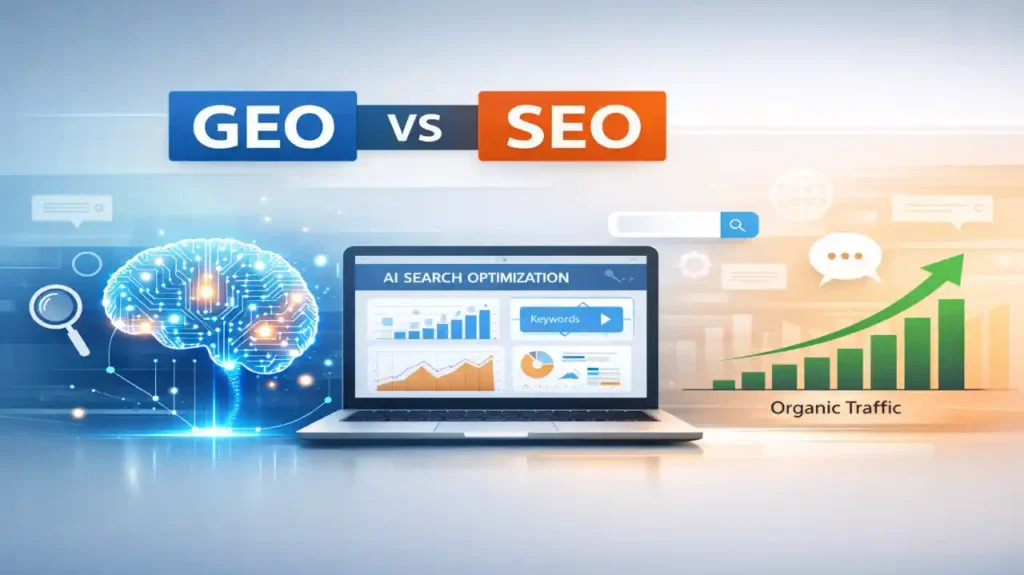
GEO vs SEO showing how AI search optimization tools increase organic traffic
AI & Machine Learning, Digital Marketing & Social Media

GEO vs SEO: How AI Search Optimization Tools Increase Organic Traffic Beyond Google Rankings

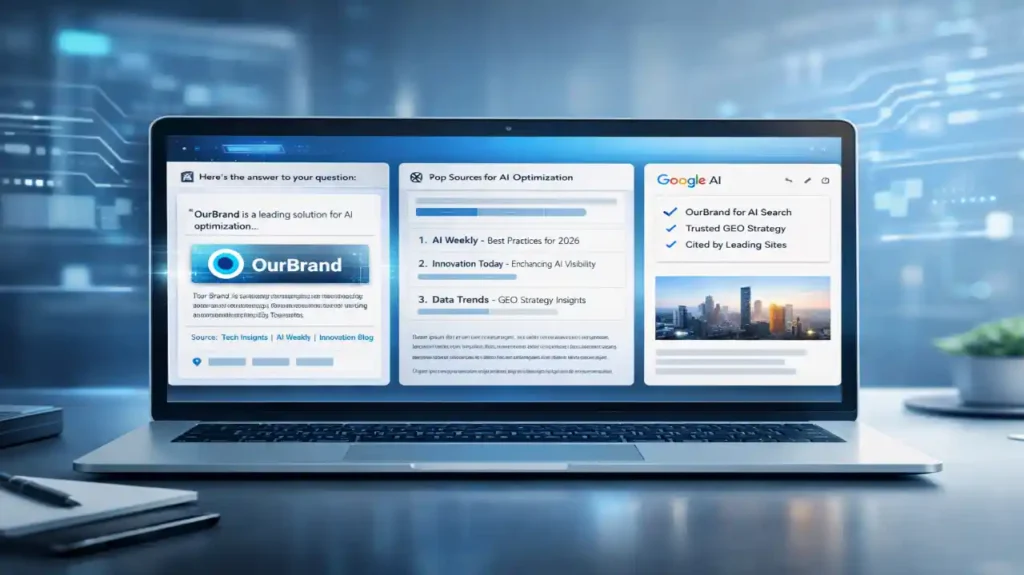
Introduction Let’s be honest—search is not the same anymore. A few years ago, SEO was simple. You write content, add keywords, build some links, and if you rank on Google, you get traffic. Done. But now, things are changing very fast. People are searching using AI chat tools, voice search, and AI-generated answers. Even Google is showing AI answers directly on the search page. That’s why many website owners are confused today. They ask one big question again and again: how ai search optimization tools increase organic traffic when clicks are becoming harder? In this blog, I will explain everything in a clean and easy way. GEO vs SEO, and how AI tools can help you grow traffic beyond Google rankings. Read Also : Future of SEO in 2026: How AI Is Changing Search Behavior What is SEO? (The Old but Still Important Game) SEO means Search Engine Optimization. It is the process of optimizing your website so it ranks higher on search engines like Google and Bing. When you rank higher, more people click your page. More clicks means more organic traffic. That is the traditional SEO model. SEO is still important in 2026. But today, SEO is not only about ranking—it is also about trust, clarity, and being the best answer. What is GEO? (The New Search Reality) GEO means Generative Engine Optimization. It focuses on optimizing content for AI-based answer engines and generative search results. Today, AI systems read multiple pages and create a short answer. Many users read that answer and leave without clicking any website. So GEO is about making your content easy for AI to understand and use. When AI tools use your content in their answers, your visibility grows even without direct rankings. GEO vs SEO (Main Differences in Simple Words) SEO focuses on search engines like Google. GEO focuses on AI engines and AI answer systems. In SEO, the goal is to rank in search results. In GEO, the goal is to be included in AI answers and summaries. SEO brings traffic mostly from clicks. GEO brings traffic from brand trust, mentions, and future searches when users remember your name. Why Organic Traffic is Changing in 2026 (The Real Reason) One big reason organic traffic is changing is zero-click search. This means users get answers directly on the search page and do not click any website. AI Overviews and chat-based search are making this trend bigger. Users want quick answers, not long browsing. This is why we must think beyond Google clicks. We must learn how ai search optimization tools increase organic traffic across different search platforms. How AI Search Optimization Tools Increase Organic Traffic (The Core Idea) AI tools help you in research, planning, writing, and optimization. They remove guesswork from SEO and give you clear direction. They also help you write in a way that is easy for AI engines to read and quote. That is a big part of GEO. So when you use them correctly, how ai search optimization tools increase organic traffic becomes very practical, not theoretical. AI SEO Tools for Organic Traffic (Why They Matter) AI SEO tools for organic traffic help you find keywords faster and understand what users actually want. They also help you create better content structure, better headings, and better topic coverage. These factors increase rankings naturally. And when content quality improves, it performs better not just on Google but also inside AI answers. That is why these tools matter in 2026. How AI Improves Search Rankings (Without Tricks) Many people think AI improves rankings by keyword stuffing. But real SEO does not work like that anymore. how AI improves search rankings is mainly through better relevance and better user experience. AI tools help you match search intent properly. They also help you remove weak sections, add missing points, and improve flow. When your content feels complete, rankings improve automatically. AI Helps You Understand Search Intent Better Search intent means what the user really wants. Some users want a definition, some want steps, and some want tool lists. AI tools can analyze top-ranking pages and tell you what the common structure is. This helps you create content that matches Google’s expectations. That is one strong reason how AI improves search rankings in a smart and safe way. AI Helps Improve Content Readability Readability is very important today. People do not like long blocks of text. AI tools help you write short sentences and short paragraphs. This increases time-on-page and reduces bounce rate. When users stay longer, Google considers your content helpful. That is another reason how AI improves search rankings. AI-Powered Keyword Research Tools (The Smart Keyword System) AI-powered keyword research tools do not only give keywords. They give you keyword clusters, intent groups, and question-style queries. This helps you plan content in a better way. Instead of writing random points, you build a full topic map. This topic map helps your website become an authority. And authority is one of the biggest ranking factors in modern SEO. Long-Tail Keywords Bring the Best Organic Traffic Long-tail keywords are longer and more specific. They usually have lower competition and higher conversion. For example, instead of “AI SEO tools”, you can target how ai search optimization tools increase organic traffic. These keywords bring visitors who are serious and need exact answers. That is why long-tail strategy works very well in 2026. Keyword Clustering Helps SEO and GEO Together Keyword clustering means grouping similar keywords under one topic. This helps you create strong H2 and H3 headings. AI loves structured content, and Google also loves structured content. So clustering supports both GEO and SEO. This is a big reason how ai search optimization tools increase organic traffic beyond rankings. AI Content Optimization for SEO (This is Where Most People Fail) AI content optimization for SEO is not about writing content using AI and publishing it directly. It is about improving your human-written content with AI support. AI tools can tell you what parts are missing and what should be improved. When you optimize content, you increase its quality and depth. That is

AI search monitoring tools dashboard showing brand mentions, AI visibility KPIs and ROI tracking in 2026
AI & Machine Learning

Why Use AI Search Monitoring Tools in 2026? (Benefits, KPIs & ROI With Examples)

Introduction If you’re doing SEO in 2026, then let me tell you something honestly—SEO isn’t only about Google rankings anymore. The way people search has changed, and the way brands get discovered has changed too. Now people ask questions directly in AI tools like ChatGPT, Perplexity, Gemini, and AI Overviews. And here’s the real twist: AI doesn’t just show ten blue links. It gives one final answer. That means only a few brands get mentioned, and the rest get ignored. This is exactly where the question becomes super important: why use ai search monitoring tools in 2026? In this blog, I’ll break everything down in a simple way—benefits, KPIs, and real ROI examples—so you fully understand what’s happening and how to stay visible. What’s happening in 2026? AI search is changing everything In the past, users searched on Google, clicked websites, and compared options. But in 2026, users are taking shortcuts—AI gives them direct answers. Most of the time, the user doesn’t even click any website. So now, ranking on Google is still useful, but it’s not enough. The bigger question is: does AI mention your brand or not? Because if AI doesn’t mention you, users may never even know you exist. Read Also : How to Improve Brand Visibility in AI Search Engines in 2026  What does AI search monitoring actually mean? AI search monitoring means tracking how your brand, website, or content appears inside AI-generated answers. It’s like checking your visibility in AI platforms the same way we track rankings in Google. These tools help you detect mentions, citations, competitor visibility, and even sentiment. That’s why why use ai search monitoring tools is becoming a serious SEO topic in 2026.  AI search monitoring benefits (why this matters so much) Let’s talk about the real reasons. These are the AI search monitoring benefits that actually move the needle for brands.  1) You finally know if AI is recommending you Sometimes AI mentions your brand in answers even when you’re not ranking #1 on Google. Without monitoring, you’ll never know this happened. With monitoring, you can track those mentions and build on them. This alone is a big reason why use ai search monitoring tools, because AI recommendations can drive brand trust instantly. 2) You can track visibility that analytics can’t show Google Analytics tracks clicks and traffic, but AI visibility often works without clicks. A user can see your brand in AI results, trust it, and search you later. Analytics won’t connect those dots. So if you want to track AI search visibility, you need AI monitoring data—not just traffic reports. 3) You catch competitor takeover early In many niches, AI starts recommending the same brands repeatedly. If your competitor is being mentioned and you are not, your market share quietly drops. The scary part is—you may not notice this for months. That’s why use ai search monitoring tools is not only growth-focused, it’s also protection.  4) You can fix wrong or outdated AI info AI answers can be outdated or simply incorrect. It may mention old prices, wrong features, or outdated brand details. This can seriously harm trust even if your product is good. When you monitor brand mentions in AI search, you can detect wrong info early and update your content accordingly. 5) You can make smarter content decisions Many people publish content blindly and hope it ranks. But monitoring shows what kind of questions AI answers, what content AI cites, and what competitors are winning. This reduces guesswork and makes your content strategy sharper and more profitable. Track AI search visibility (the new SEO priority) In 2026, visibility doesn’t only mean “ranking on page 1.” Visibility also means being present in AI answers. That’s why SEO is shifting toward AI visibility tracking. To track AI search visibility, you need to know where you show up and where you don’t. Without tracking, you can’t improve because you don’t even know what’s missing.  What AI visibility metrics should you track? Here are practical things you should track consistently: This data becomes your AI SEO scorecard and makes monitoring useful.  Monitor brand mentions in AI search (because mentions = trust) In the AI era, people trust AI answers quickly. If AI says your tool is one of the best, users believe it without checking ten websites. That’s why brand mentions matter more than ever. When you monitor brand mentions in AI search, you are basically tracking digital reputation. If AI is not mentioning you, you’re losing visibility. If AI is mentioning you incorrectly, you’re losing trust. Brand mentions are becoming the new SEO “signal” Earlier, backlinks were the big trust signal. Now AI mentions are also becoming a trust signal because AI is shaping choices. The brands AI talks about feel more credible to the audience. So in 2026, brand mentions are not vanity metrics—they’re demand creators. AI SERP tracking tools vs traditional rank trackers Most SEO people already use rank trackers. But rank tracking is not enough now. Because AI results are different from Google blue links. AI may recommend a competitor even when you rank above them. That’s why AI SERP tracking tools are important. They show whether AI includes you in answers, even if rankings look fine on paper. Why traditional rank tracking fails in 2026 Traditional rank tracking can’t tell: So if you want the full picture, AI SERP tracking tools are required.  KPIs that prove why use ai search monitoring tools If you want to treat AI monitoring seriously, you need KPIs. KPIs make everything measurable and clear. Without KPIs, you’re just “checking mentions” randomly. These KPIs explain why use ai search monitoring tools as a strategic advantage.  KPI #1 — Mention Frequency This tells how many times your brand appears across tracked prompts. More mentions generally mean more awareness and more recommendation potential. If mentions drop suddenly, it signals a competitor gain or a content issue.  KPI #2 — Citation Rate Citations show whether AI trusts your content enough to use it as a source. A higher citation rate means your content is becoming AI-friendly and authoritative. This

How to improve brand visibility in AI search engines in 2026 with GEO strategy and AI citations
AI & Machine Learning

How to Improve Brand Visibility in AI Search Engines in 2026

Introduction In 2026, SEO is not the same anymore. The full system has changed a lot. Earlier, we used to say, “We want to rank on Google.” But now the real game is different. The real goal is to appear inside AI search answers. To be honest, today most people don’t first check the “10 blue links.” They first read the AI answer. And if your brand is not in the AI answer, the user feels like maybe the brand does not even exist. So today the focus is not only ranking. Today the focus is visibility, mentions, citations, and recommendations inside AI answers. In this blog, I will explain how to improve brand visibility in ai search engines in a simple way, step-by-step, without boring things. Read Also : What is the Best Tool to Build AI Agents?- (2026) What’s New in 2026? AI Search Engines Are Not Like Old Search Engines First, you need to understand how AI search works. Traditional Google search is simple. The user searches something, results show, the user clicks, and the website gets traffic. But AI search engines work differently. In AI search, the user asks a question and AI gives a direct answer. AI may mention some brands and sources, and the user often feels satisfied without clicking any link. This change is important because now your goal is not only to rank #1. Your goal is to appear inside AI answers. That is why AI search optimization for brands is important in 2026. Why Brand Visibility in AI Search Matters More Than Google Rankings Here is a simple fact. The brands that AI search engines mention again and again get strong trust very fast. In the mind of the user, repeated mention means reliability and authority. AI search engines usually mention brands that look trustworthy. These brands show the same information everywhere. They are mentioned on different websites, and they feel like real experts. That is why how to improve brand visibility in ai search engines is not just one trick. It is a complete system that you need to build slowly and properly. How to Improve Brand Visibility in AI Search Engines (The 2026 Framework) Now I will share the exact framework. If you truly want to apply how to improve brand visibility in ai search engines, you need to follow five main pillars. Each pillar is important because AI search engines do not choose sources randomly. AI engines pick sources that feel clear, consistent, and trustworthy. Pillar 1: Become an Entity (Not Just a Website) AI search engines understand entities more than keywords. That means AI wants to clearly know who you are, what you do, and where you fit. Entity means your brand name, founder name, category, product or service, location, and authority signals. When AI understands your brand as an entity, you can grow strong brand visibility in generative AI search. Pillar 2: Become a Reliable Source (Not Noise) AI engines avoid spam and weak content. If your content looks confusing, fake, or empty, AI will not trust it. That is why you should give clear points, proof and real facts, a simple structure, and real examples. When your content feels reliable, AI feels confident to pick and cite it. Pillar 3: Build “Mention Networks” To appear in AI results, your website alone is not enough. AI should see your brand in many places. This is one of the biggest changes in 2026 SEO. When your brand is present in forums, communities, trusted websites, blogs, and knowledge platforms, AI takes it as proof. More presence across the internet increases AI trust. Pillar 4: Structure Content Like AI Likes AI does not like messy content. AI prefers content that looks simple and easy to read. If AI cannot extract meaning easily, it will not use your content in answers. AI likes clean headings, short answers, question-and-answer sections, and clear definitions. Good structure helps AI understand your message fast. Pillar 5: Measure + Improve If you don’t measure, you are only guessing. AI visibility is not something you should assume. You must track mentions, citations, and AI visibility using prompts. When you measure properly, you can improve faster. Now let’s make this framework practical in real steps. How to Rank in AI Search Engines (What Actually Works in 2026) This is the important keyword here: how to rank in AI search engines. In 2026, AI ranking is not the same as Google ranking. AI models choose sources based on authority, relevance, freshness, clarity, and reliability signals. To rank better, you need to follow the real AI ranking formula. The first step is to make your content citation-friendly. AI cites content when it has clear headings, clean facts, short definitions, and steps in order. The second step is to write content in an answer format. AI wants direct answers. So in every section, start with a quick summary, then explain fully, and keep the flow easy. The third step is to cover topics deeper than top results. Most articles only touch the surface. You can reach the top 3 when your depth is more, your structure is better, and your examples feel real and clear. The fourth step is keeping your brand info the same everywhere. Use the same brand name, category, and identity everywhere. If the information is different on different websites, AI gets confused. GEO (Generative Engine Optimization) Strategy That Improves AI Visibility Now the trending keyword is GEO (Generative Engine Optimization) strategy. GEO means your content and brand should be optimized in a way that AI search engines can trust and cite. GEO is not keyword stuffing. GEO is not fake backlinks. GEO is not robotic content. GEO is about structure, authority, credibility, and visibility signals. A practical GEO strategy starts with publishing three types of pages. AI search engines love definition pages, how-to pages, and comparison pages. Every page should solve one clear query. The next step is adding small direct answers under every heading. If your heading is “What is AI search visibility?” then

Best tools for AI automation agents for email CRM and support
AI & Machine Learning

Best Tool to Build AI Agents (2026): A Practical Tool-by-Tool Decision Guide (No-Code + Coding)

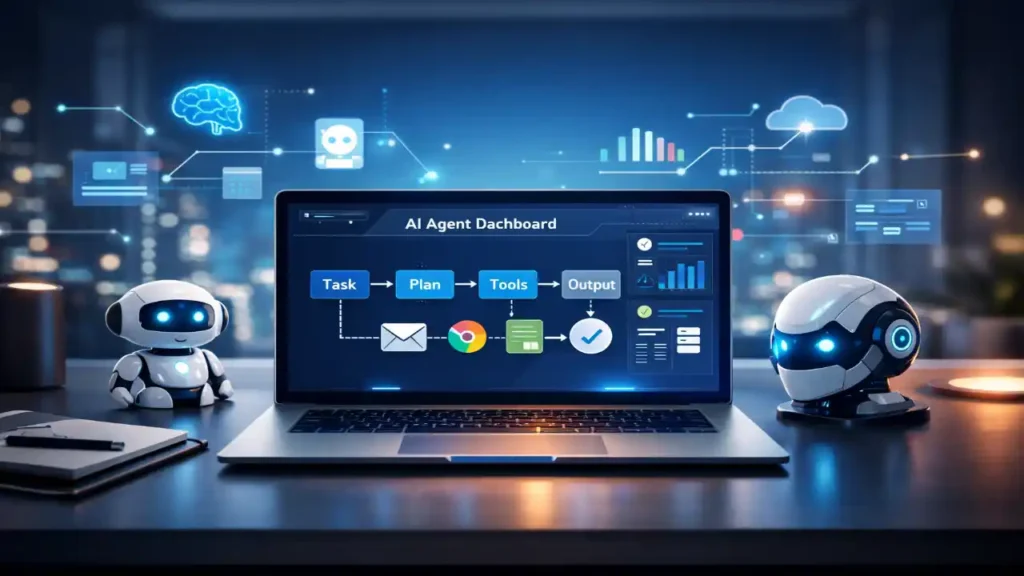
Introduction “AI agents are on another level in 2026 — everyone is saying, “Build an agent, automate your workflow, make AI do the work.” But what is the real problem? Choosing the tool. And honestly, this is the most confusing part. Because on one side, there are no-code tools that feel very beginner-friendly… and on the other side, there are coding frameworks that are powerful but a bit heavy. So today’s simple goal: I will give you a clear, practical decision guide so that you can decide by yourself: ✅ What is the best tool to build AI agents? (based on your use-case). No hype, no promotion, just real clarity. First understand — What is an AI Agent? (in simple language) Many people think an “AI agent” is a chatbot, but an agent is not just chat. An AI agent is a system that understands the goal (task), makes a plan, uses tools like browser, email, sheets, and APIs, and then gives the final output. In 2 lines: Agent = AI + Tools + Decision + Action. And this is where the question naturally comes: What is the best tool to build AI agents? Because to build an agent, only an AI model is not enough, you also need a tool. Why have AI agent tools become so important in 2026? Because now it is not just the time of content writing AI. Now companies and creators need automated research agents, customer support agents, lead generation agents, reporting agents, and scheduling or email agents. That’s why people are searching: What is the best tool to build AI agents? Because they want “AI + automation + control” in one place. Before choosing a tool, check these 5 things (or you will regret later) Every AI agent building platform is not “best”. It becomes best only when it fits your use-case. First, you should check your level — if you are a beginner, no-code AI agent tools are usually best, but if you are a developer, coding frameworks can be better. Second, you should be clear about what the agent will do, like automation, research, support, or internal team work. Third, you should think about integrations, because if you want to connect Gmail, WhatsApp, Sheets, Notion, Slack etc, then integration matters. Fourth, you should consider debugging and monitoring, because agents sometimes do the wrong work, so logs and controls are important. Fifth, you should think about cost vs control — no-code tools are easy but can be expensive, while coding tools are cheap and flexible but take time. These criteria will decide: What is the best tool to build AI agents? Quick Decision Map (No-Code vs Coding) — direct answer If you want to decide fast, follow this simple map. Choose no-code if you are a beginner, if you want to deploy agents quickly, if you want ready templates, and if you want minimal tech headache. This is where no-code AI agent tools shine. But choose coding or a framework if you are a developer, if you need custom memory, tools, or RAG, if you want to optimize cost, and if you want full control. This is where AI agent framework shines. What does “Best AI agent builder tool” mean? (People get this wrong) Most blogs say “best AI agent builder tool” and paste a list of 10 tools, but honestly, best tool does not mean a list. Best tool simply means the best fit for your goal. That is why I will explain tools based on use-case. Tool-by-Tool Practical Decision Guide (2026) Now I am guiding you category-wise. Note: I am not pushing any tool. The goal is only to clear your confusion about What is the best tool to build AI agents? No-Code AI Agent Tools (Best for beginners) These tools are for people who say: “Bro, I don’t want to code, I just want to build an agent.” No-code tools are best for workflow automation, triggers and actions, simple decision logic, and quick MVP. But there are limitations too — heavy customization is difficult, advanced memory or RAG control is limited, and cost scaling issues can happen. If you are a beginner, it’s totally okay. Starting with no-code is a smart step. At this stage, the answer is often: What is the best tool to build AI agents? 👉 no-code AI agent tools. AI Agent Building Platform (Hybrid approach) This category is interesting. AI agent building platform means a UI based builder, plus some coding or scripting flexibility, and overall better control than pure no-code. This approach is best when you want both power and ease, when you want to work with a team, when you want to manage and monitor the agent, and when logs and governance are important. This ranks in 2026 because companies don’t want “just automation”. They want reliability, role-based access, dashboards, and consistent outputs. That is why people search again: What is the best tool to build AI agents? And the answer becomes: a solid AI agent building platform. Best tools for AI automation agents (Business use-case) This is my favorite category — because ROI is direct here. Automation agents can read and reply to emails, route customer queries, update spreadsheets, generate reports, and schedule meetings. Basically, they remove boring repetitive work. The best tools for AI automation agents should have strong integrations like email, CRM, sheets, good triggers, reliability, retry or fallback, and a clear audit trail. If you are building an agent for business automation, you are already on the right track because demand for automation agents is crazy high in 2026. Here your keyword fits naturally: What is the best tool to build AI agents? For automation, it is best tools for AI automation agents. AI Agent Framework (Best for developers) Now we enter the real coding world. AI agent framework means you code the logic, you design tools, and you control memory, RAG, and calls. A framework-based agent is best when you need custom workflows, when you want to

Futuristic banner showing how to make AI agents without coding using no-code automation workflows for content, email, and research
AI & Machine Learning

How to Build an AI Agent Workflow Without Coding (Automation for Content, Email & Research)

Let’s be honest—AI agents sound exciting, but the moment people hear “workflow” they think it’s something only developers can build. And that’s where most beginners stop. But the truth is: in 2026, you can build powerful AI agent workflows without writing a single line of code. Like seriously. You just need the right structure and a clear goal. In this blog, I’ll show you how to make ai agents without coding in a practical way—specifically for: No complicated language. No boring theory. Just a clean, step-by-step system. Because if you understand the workflow logic once, you can build multiple agents from it. And you’ll feel like “okay… this is actually doable.” Read Also : Generative AI vs Agentic AI: Real Differences in 2026 What an AI Agent Workflow Actually Means (In Simple Language) Before you build anything, you need to understand this clearly: An AI agent is not just ChatGPT answering questions. An AI agent workflow is a system where AI: So basically, it’s like a virtual assistant that doesn’t get tired—and doesn’t forget what you told it yesterday. And the best part? You can still learn how to make ai agents without coding even if you’re not technical. Why No-Code AI Agent Workflows Are Exploding in 2026 In 2026, no-code tools have become very powerful. They allow anyone to build workflows just by connecting blocks. So instead of writing code, you do things like: This is why learning how to make ai agents without coding is becoming a skill that creators, marketers, and founders all want. Not because it’s trendy… but because it saves time. The Core Ingredients of a No-Code AI Agent Workflow Whenever you create any automation, you basically need these 5 parts: If you get these five right, you can build almost anything. This is the foundation of how to make ai agents without coding—and it stays the same across tools. Step-by-Step: How to Make AI Agents Without Coding (Workflow Method) Now let’s build the exact system. Step 1: Choose One Clear Job (Don’t Make a “God Agent”) Most beginners make one mistake: They try to build ONE agent that does everything. Bad idea. Instead create one agent for one job like: When one agent has one job, results become clean and predictable. This is the #1 rule in how to make ai agents without coding workflows. Step 2: Map the Workflow in 5 Lines Before using any tool, write the workflow like this: Example: Trigger: New blog topic addedInput: Topic + target audienceProcessing: AI researches & builds outlineAction: Draft created in documentOutput: Ready-to-edit content draft This planning alone makes your automation 10x smoother. Step 3: Add AI Instructions (Prompt Rules) This is where your workflow becomes “smart”. Your instruction should include: Keep instructions simple. Too much instruction confuses AI. This is how you improve how to make ai agents without coding quality output. Step 4: Add Knowledge Source (Optional but Powerful) If your workflow needs accuracy, connect it to knowledge like: This is called “knowledge base”. It helps AI stay consistent. Even in no-code setups, this step makes agent output feel professional. Step 5: Test with Real Inputs (Not Sample Ones) Testing with perfect inputs is easy. But real-world inputs are messy: So test with 10 real examples. That’s how you build real agents. That’s how you master how to make ai agents without coding. Building Automation for Content (No-Code Content Agent Workflow) Let’s start with content workflow because it’s the easiest and most fun. A content automation agent can: Example Workflow: Content Creation Agent Trigger: You add a topic into a sheetAI Task: Result: You save hours every week. This is a very practical example of how to make ai agents without coding for creators. Content Workflow Tips (So It Sounds Human) If you want content to feel human, instruct the AI like: A little imperfection is good too. Perfect writing feels fake. Building Automation for Email (No-Code Email Agent Workflow) Email automation is powerful because: So yes, learning how to make ai agents without coding for email is a game-changer. Example Workflow: Smart Email Reply Agent Trigger: New email receivedAI Task: This workflow doesn’t replace you. It supports you. And that’s safe for third-party publishing too. 2–3 Line Rule for Email Agent Output Your email agent should: That’s it. Clean and useful. Building Automation for Research (No-Code Research Agent Workflow) Now research. This is where agents feel magical. A research agent can: Example Workflow: Research Summary Agent Trigger: You upload a file / paste a topicAI Task: This is one of the best practical use cases of how to make ai agents without coding.  Increase Instagram Reach Organically in 2026 (Pro Tips) — As an AI Agent Workflow Now let’s connect your Instagram keyword naturally. You can build an AI agent workflow that automates your Instagram growth strategy. Trigger: new reel ideaAI Task: This workflow helps you Increase Instagram Reach Organically in 2026 (Pro Tips) because it reduces inconsistency and saves time. And yes—this is still part of learning how to make ai agents without coding.  Instagram Engagement Tips 2026 to Boost Organic Reach (Agent Setup) Create an agent that suggests engagement actions: This automation supports Instagram Engagement Tips 2026 to Boost Organic Reach without you thinking daily “what should I post today?” Best Time to Post on Instagram 2026 + Engagement Tips (Workflow Automation) A smart agent can analyze: Then it outputs: That becomes a “schedule agent” for creators. And again, it fits into the bigger system of how to make ai agents without coding. Instagram Reels Reach Strategy 2026 for More Views (Agent Workflow) You can create a Reels strategy agent that generates: So instead of guessing, you run the workflow and get: This automation supports Instagram Reels Reach Strategy 2026 for More Views at scale. How Instagram Algorithm Works in 2026 (Full Guide) — Research Agent Output Style Now here’s the smart part. You can create an “Algorithm Research Agent”: Trigger: “Instagram Algorithm in 2026 update” queryAI Task: That’s how your workflow can generate sections like How Instagram Algorithm Works in 2026 (Full Guide) automatically, consistently, and in your tone. Common Mistakes (That Kill No-Code AI Agents) Let me tell you straight—most agents fail because of these mistakes: 1) Too

A freelancer working on a laptop while AI tools handle writing, design, automation, and data tasks in a futuristic 2026 workspace.
AI & Machine Learning

AI Tools That May Replace Freelancers in 2026 (A Reality Check)

Let’s be honest for a second.If you are a freelancer, or planning to become one, this thought has already crossed your mind — “Will AI take my work?” And no, this blog is not written to scare you.It’s written to talk clearly, realistically, and without drama. In 2026, AI tools are not just “helping” anymore.In many areas, they are doing the work fully — faster, cheaper, and without sleep. This is where the uncomfortable conversation begins. This article is a reality check, not hype.We’ll talk about AI tools replacing freelancers, where it’s already happening, where it might happen next, and what it truly means for the future of freelancing with AI. No promotions.No exaggeration.Just facts mixed with real-world thinking. Real Also : Generative AI vs Agentic AI: What’s the Real Difference in 2026? Understanding the Rise of AI Tools Replacing Freelancers AI did not suddenly become powerful in 2026.It grew slowly, silently, tool by tool. At first, freelancers used AI to save time.Then clients started using AI to save money. That shift changed everything. Today, AI tools replacing freelancers is not a theory.It’s already visible in content writing, design, data tasks, and even basic coding. The real reason behind this change is simple: This doesn’t mean freelancers disappear.But it does mean the old way of freelancing is under pressure. Will AI Replace Freelance Jobs Completely? This is the question everyone asks but rarely answers honestly. Will AI replace freelance jobs in 2026? Short answer: Some yes, some no. Long answer:AI replaces tasks, not people — but freelancers who only sell tasks are at risk. If your freelance work is: Then yes, AI tools replacing freelancers becomes very real. However, if your work involves: Then AI struggles there — even in 2026. The danger is not AI itself.The danger is freelancers refusing to evolve. Impact of AI on Freelancers in 2026 (Reality, Not Fear) Let’s talk impact, not predictions. Impact of AI on freelancers in 2026 is already visible in three ways: Earlier, beginners could survive doing basic work.Now AI does that basic work in seconds. This forces freelancers to either: This shift feels unfair, but it’s not new.Every industry faces automation at some point. Freelancing is just facing it faster. AI Automation for Freelance Work: Where Humans Are Losing Ground This part matters a lot. AI is not replacing “freelancers” randomly.It’s replacing specific freelance services through automation. Below are areas where AI automation for freelance work is strongest. Content Writing and Blogging Tasks AI writes fast.Sometimes too fast. For basic content like: Clients now use AI directly. This is one of the clearest examples of AI tools replacing freelancers in real time. But here’s the truth most people miss: AI writes words.Humans write meaning. Freelancers who only rewrite existing content feel the heat.Those who bring experience, opinion, storytelling — still survive. Graphic Design and Simple Visual Work Design used to mean skill.Now it often means speed. AI handles: For quick visuals, clients don’t wait anymore. This has changed the future of freelancing with AI in creative fields. High-level branding still needs humans.But quick, low-budget design work is shrinking. Data Entry and Virtual Assistant Tasks This category is hit the hardest. AI automation handles: These were once safe freelance zones. Now, AI automation for freelance work does them silently in the background. This doesn’t mean all VAs disappear.It means basic VA roles disappear first. Basic Coding and Script Writing This one shocks many people. AI now helps generate: For junior-level coding tasks, clients rely less on freelancers. Again, AI tools replacing freelancers here doesn’t mean senior developers vanish.It means entry-level coding gigs shrink fast. Future of Freelancing with AI: Adapt or Be Ignored Now comes the important part. The future of freelancing with AI is not dark.It’s selective. AI removes the middle layer.Only low skill and high skill survive. Average work suffers. This forces freelancers to ask uncomfortable questions: Freelancers who adapt become stronger.Those who resist feel replaced. This is not punishment.It’s evolution. How Freelancers Can Stay Relevant Despite AI Tools Replacing Freelancers Let’s be practical. Here’s how freelancers survive in a world of AI tools replacing freelancers: Clients don’t pay for typing anymore.They pay for thinking. AI can assist.Humans still decide. A Honest Reality Check (No Motivation Talk) AI will not ask for permission.It will keep improving. Ignoring this reality is risky.Panicking is useless. The smart move is awareness. Understand where AI tools replacing freelancers is true.And where it’s just noise. Freelancing is not dying.Lazy freelancing is. Freelance Skills AI Still Struggles to Replace in 2026 Before assuming everything is lost, let’s slow down. Even in 2026, there are areas where AI tools replacing freelancers simply don’t work well.Not because AI is weak — but because humans are complicated. Strategic Thinking and Decision-Making AI gives options.Humans choose direction. Strategy means: AI cannot fully understand context the way humans do. This is why strategy-based freelancers still survive, even when AI automation for freelance work increases everywhere else. Client Communication and Relationship Handling This part is underrated. Clients don’t just want output.They want understanding. Humans notice: AI responds correctly.Humans respond appropriately. This emotional layer is missing in AI, which limits the impact of AI on freelancers in 2026 when it comes to relationship-based work. Creative Direction and Original Thinking AI generates based on patterns.Humans create based on experience. There’s a big difference. Original ideas come from: That’s why truly creative freelancers are not replaced easily, even when AI tools replacing freelancers become more common. Consulting, Coaching, and Advisory Roles AI can suggest.Humans guide. Advisory work requires: This space actually grows as automation increases. Ironically, the more AI spreads, the more human advice becomes valuable. New Freelance Opportunities Created by AI (Nobody Talks About This) Here’s the side most people ignore. While discussing will AI replace freelance jobs, they forget that AI also creates new freelance roles. Not everything is about replacement. AI Tool Operators and Workflow Designers Many businesses don’t know how to use AI properly. They need freelancers who can: This is a new category born directly from AI automation for freelance work. AI Content Editors and Quality Controllers AI produces content fast.But it still makes mistakes. Someone needs to: This role exists because AI tools replacing freelancers are not perfect. AI Ethics, Policy, and Review Roles As AI grows, so do risks. Companies now need humans to: These roles

Futuristic illustration comparing generative AI and agentic AI in 2026, showing content creation on one side and autonomous decision-making systems on the other.
AI & Machine Learning

Generative AI vs Agentic AI: What’s the Real Difference in 2026?

Artificial Intelligence is no longer just a buzzword. By 2026, AI is quietly sitting inside our phones, browsers, offices, and even decision-making systems. But here’s the thing most people are still confused about — not all AI is the same. You’ve probably heard terms like Generative AI and now suddenly Agentic AI is everywhere. Some people use them interchangeably. Some think agentic AI is just a fancier version of generative AI. Honestly, that confusion is normal. So let’s slow down for a moment. In this blog, I’m going to break down generative AI vs agentic AI in a very simple, human way. No hype. No technical overload. Just real clarity about what each one actually does, how they work, and why the difference matters a lot in 2026. If you’ve ever wondered “Is agentic AI really different, or just another AI trend?”, this article is for you. Understanding the Basics Before Comparing Anything Before jumping into the difference between generative AI and agentic AI, we need to understand them individually. Otherwise, comparisons won’t make much sense. Let’s start from the familiar one. Read Also : Which Is the Best Free AI for Content Writing? What Is Generative AI? Generative AI is the type of AI most of us already interact with every day, even if we don’t realize it. In simple words, generative AI creates content. It generates text, images, videos, code, audio, or designs based on the input you give. You ask something. It responds. You prompt it again. It generates again. That’s the core behavior. Key characteristics of generative AI Think of generative AI as a very smart assistant who waits for instructions. It doesn’t decide what to do next on its own. That limitation becomes important when we compare generative AI vs agentic AI. Common examples of generative AI behavior Each output depends fully on your input. No input, no action. And honestly, that’s perfectly fine for many use cases. Where Generative AI Starts to Feel Limited in 2026 By 2026, businesses and individuals want more than just content generation. They want AI that can do things, not just write things. This is where generative AI starts to show its boundaries. Some common limitations people notice: So while generative AI is powerful, it still feels reactive. It waits. It answers. Then it stops. This gap leads us directly to the next evolution. What Is Agentic AI in 2026? Now let’s talk about the term everyone is curious about. What is agentic AI in 2026? Agentic AI is designed to act, not just respond. Instead of waiting for prompts, agentic AI systems are built to: In other words, agentic AI behaves more like an autonomous worker than a passive assistant. That’s the real shift. If generative AI feels like someone who answers questions, agentic AI feels like someone who handles responsibility. Core traits of agentic AI This is why the discussion around generative AI vs agentic AI has become so important in 2026. Generative AI vs Agentic AI: The Core Difference Explained Simply Let’s make this very clear, without complicated terms. The main difference between generative AI and agentic AI That’s it. Everything else flows from this one idea. But to truly understand the difference between generative AI and agentic AI, we need to break it down further. Difference Between Generative AI and Agentic AI (Side-by-Side Thinking) Instead of a table, let’s explain this naturally. Decision-making ability Generative AI does not make decisions. It produces outputs based on patterns and instructions. Agentic AI evaluates options, chooses paths, and decides what to do next without constant human input. Task handling Generative AI handles single tasks very well. Agentic AI handles chains of tasks, sometimes across different systems. Autonomy level Generative AI is reactive. Agentic AI is proactive. This is one of the biggest differences between generative AI and agentic AI in real-world usage. Feedback and adjustment Generative AI doesn’t check if its output worked. Agentic AI can observe results and adjust actions accordingly. Why This Difference Matters More in 2026 Than Before A few years ago, content generation alone felt revolutionary. But expectations evolve. In 2026, businesses want AI that: This is exactly why the generative AI vs agentic AI debate matters now, not later. The market is shifting from AI that talks to AI that works. Agentic AI Use Cases in 2026 (Realistic and Practical) Now let’s ground this discussion in reality. Agentic AI use cases in 2026 are expanding fast Agentic AI isn’t some distant concept anymore. It’s already being tested and deployed in controlled environments. Here are some realistic use cases. Business operations Software development workflows This goes far beyond what generative AI alone can do. Customer support systems These agentic AI use cases in 2026 focus on outcomes, not just responses. Where Generative AI Still Makes More Sense Now, this is important. This is not about saying one is “better” than the other. Generative AI still plays a critical role. Best scenarios for generative AI In many cases, agentic AI actually uses generative AI inside it. So the debate of generative AI vs agentic AI is not about replacement. It’s about roles. Generative AI vs Agentic AI: How They Work Together In 2026, the smartest systems combine both. Think of generative AI as the voice and agentic AI as the brain that moves things forward. This combination is where real power emerges. Generative AI vs Agentic AI: How Agentic Systems Actually Think and Work To really understand generative AI vs agentic AI, we need to look at how agentic AI operates internally — not technically, but behaviorally. Agentic AI doesn’t just answer and stop. It follows a loop. The agentic AI working loop (simplified) This loop is what separates agentic AI from generative AI in a very practical way. Generative AI ends at “output given.”Agentic AI continues until “goal achieved.” That’s the real difference between generative AI and agentic AI in everyday use. Why Agentic AI Feels More “Human” (But Isn’t) Here’s something interesting. People often say agentic AI feels more human. That’s not because it has emotions or consciousness. It’s because it behaves with intention. Intent vs response Intent makes behavior feel purposeful. But

Scroll to Top